

Apple debuted two new chips on August 25, 2026 that bracket the desktop AI compute market: M6, its first processor built on a 2-nanometer process, arriving in a new Mac mini, and M5 Ultra, its first quad-die design and what the company calls its most powerful chip ever, arriving in a new Mac Studio. The announcement puts Apple’s first 2 nm silicon and a 512GB unified memory ceiling into two machines that start at $899 and $2,499 respectively.
M6 carries a 12-core CPU built around what Apple calls the world’s fastest CPU core, a 12-core GPU with a Neural Accelerator in every core, and a Dual 16-core Neural Engine that delivers up to twice the peak compute of previous generations. It supports up to 32GB of unified memory at 170GB/s of bandwidth, a 10 percent increase over M5. Apple claims up to 1.2x faster multithreaded CPU performance than M5 and a nearly 30 percent increase in peak GPU compute for AI.
M5 Ultra is the infrastructure play. It fuses two dual-die M5 Max chips through an updated UltraFusion interconnect into a single quad-die processor, a first for Apple silicon. The result is an up-to-36-core CPU, an up-to-80-core GPU, and 1.2TB/s of unified memory bandwidth, 50 percent more than M3 Ultra. With up to 512GB of unified memory, Apple says the chip can run large language models with hundreds of billions of parameters entirely on device.
“Today, we’re debuting the next giant leap in performance and AI compute for Apple silicon with the incredibly advanced M6 and the most powerful M-series chip yet, M5 Ultra,” said Sri Santhanam, Apple’s vice president of the Silicon Engineering Group.
How the Quad-Die UltraFusion Design Works
The M5 Ultra’s architecture is the story’s engineering core. Apple’s UltraFusion technology connects two M5 Max chips, each itself a dual-die package, into a four-die system that the operating system sees as one processor. The interconnect pushes more than 4.4TB/s of bandwidth between the dies with connection density up over 6x compared to the prior generation, according to the release. That inter-die fabric is what lets four separate pieces of silicon share a single 512GB memory pool without the latency penalties that normally split a multi-chip system into separate memory domains.
The design scales up the Fusion Architecture Apple introduced in its M5 Pro and M5 Max chips, which combined two dies into one package when they debuted in the MacBook Pro lineup on March 3, 2026. Where those laptop chips topped out at 128GB of unified memory and 614GB/s of bandwidth, the M5 Ultra quadruples the memory ceiling and roughly doubles the bandwidth for the desktop.
Every one of the M5 Ultra’s up-to-80 GPU cores includes a Neural Accelerator, a design Apple first shipped in the M5 generation. Apple claims up to 4.5x the peak GPU compute for AI compared to M3 Ultra and more than 6x compared to M1 Ultra. The chip also carries a 32-core Neural Engine and a Media Engine with four ProRes encode and decode engines plus hardware-accelerated AV1 decode.
What the New Macs Cost and When They Ship
The Mac mini with M6 starts at $899 and is available for pre-order now, with units shipping September 22, 2026. Apple also offers the Mac mini with an M5 Pro chip for buyers who need more memory bandwidth, up to 307GB/s, and up to 64GB of unified memory.
The Mac Studio with M5 Ultra starts at $2,499 for the M5 Max configuration, with M5 Ultra models configurable up to 512GB of unified memory. Pre-orders are open with the same September 22, 2026 availability date. Apple is also introducing a leasing program, Apple Upgrade, starting at $48.99 per month for 36 months on the Mac Studio.
Both machines land in a desktop AI market where the pitch is local inference: running models, agents, and image generators on the machine in front of you rather than paying per token in the cloud. Apple’s product pages name LM Studio Bionic, Ollama, and Draw Things among the apps the new hardware targets, and the company has increasingly framed its high-memory desktops as an on-ramp for developers who want to run and fine-tune models without a cloud bill.
The Fine Print on Apple’s Performance Claims
All of the speedup figures in the release are Apple’s own measurements. The company tested preproduction Mac mini and Mac Studio units in August 2026 against prior-generation hardware using what it describes as select industry-standard benchmarks, per the footnotes in the release. The “world’s fastest CPU core” claim for M6 traces to the same in-house testing against shipping competitive systems.
The 512GB unified memory ceiling is a configure-to-order option on the M5 Ultra Mac Studio, not the base configuration, which ships with less. Apple Intelligence features, including the new Siri AI, require macOS 27 and are currently available only through the Apple Beta Software Program, with general availability this fall in supported languages, according to the release footnotes.
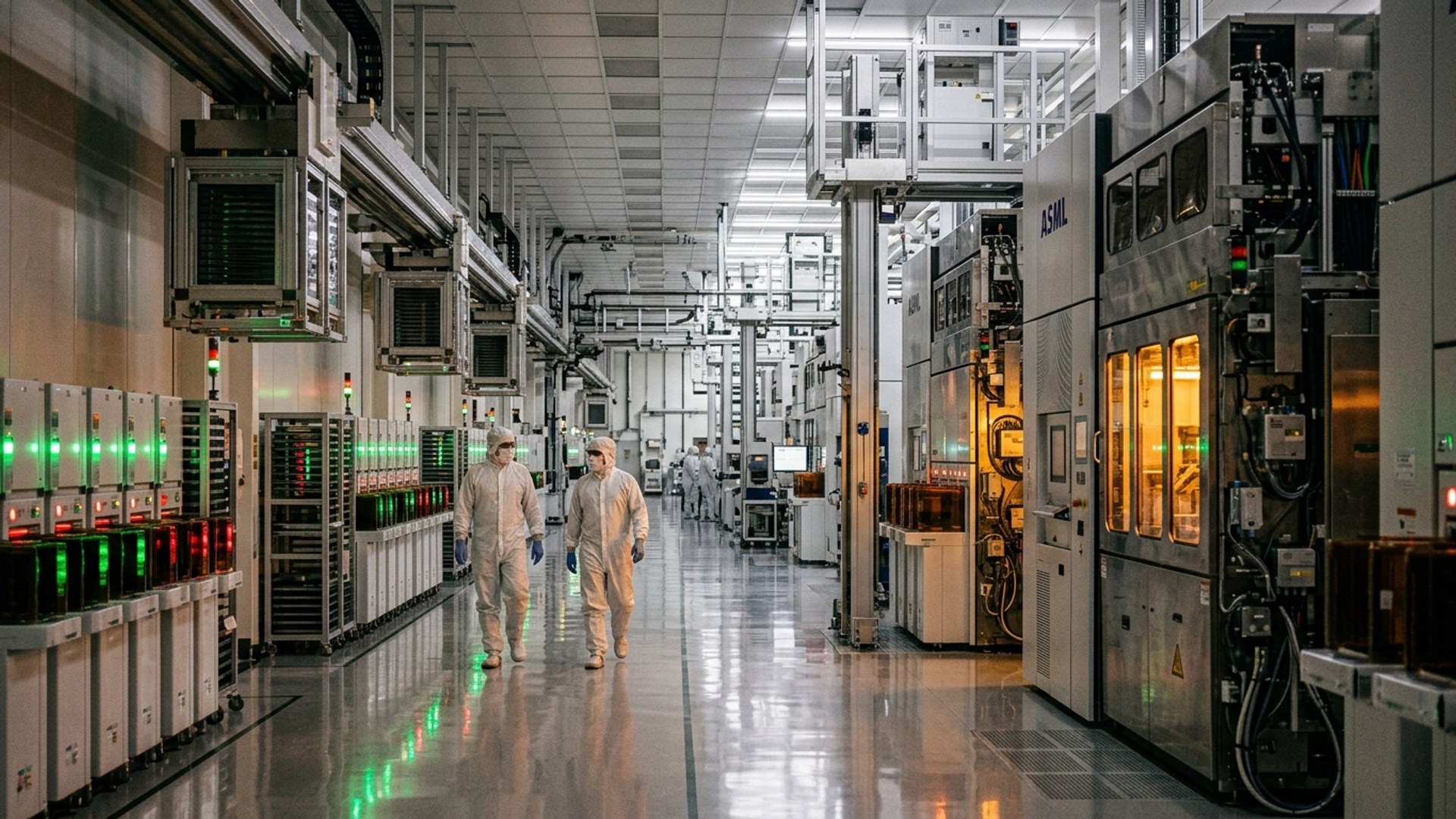
On the 2 nm process itself, Apple describes M6 as its first chip built on the node but does not name the foundry. The company has used TSMC for every generation of Apple silicon, and its Mac mini product page notes the new desktop is manufactured with 100 percent renewable electricity across the supply chain.
