

Israel has published its National AI Strategic Plan, a five-year program committing the government to a national computing base of at least 100,000 advanced AI accelerators, a domestically built quantum computer, and an advanced chip fabrication facility at 5-nanometer technology or below. The National Artificial Intelligence Directorate, the body inside the Prime Minister’s Office charged with executing the strategy, released the plan on August 13, 2026.
The document implements Government Resolution 4255, which the cabinet approved on June 16, 2026, under the title “Accelerating Artificial Intelligence in Israel and Establishing Global Leadership.” Where that resolution set the strategic principles, the new document converts them into courses of action: named institutions, buildout targets, and the regulatory posture the government intends to take toward AI development.
The organizing concept is what the Directorate calls “Lived AI” — a deliberate bet that Israel’s advantage lies not in training the largest foundation models, which the plan concedes demands compute and capital beyond a country of its size, but in being the first country to integrate AI across public life, from healthcare and education to government services. The plan states the goal plainly: Israel arrives as “a contributor of distinctive strengths in cybersecurity, physical AI, applied research and rapid real-world deployment,” seeking durable alliances that guarantee access to frontier models, accelerators, and large-scale compute as export controls and concentrated supply chains reshape access to all three.
“We have real advantages no one else can easily match: a track record of solving hard problems with limited resources, deep experience connecting intelligence to the physical world, a commanding position in cyber defense, and a research base that punches far above our weight,” said Brig. Gen. (Res.) Erez Askal, who heads the Directorate, in the Directorate’s announcement. “Those are what let us compete for real leadership in this era — this is Israel’s move from startup nation to full stack nation.”
Five Reactors, Nine Systemic Goals, and an IP Condition
The plan’s central execution layer is the National Institute for impact-driven AI applications (NIIA), which will stand up five “acceleration reactors”: regional labs, each anchored to an existing center of excellence, at least two located in the periphery as engines for technological employment outside the Tel Aviv core. Each reactor pairs a government or business lead with an implementation partner from the idea stage through national-scale rollout, working against nine systemic goals in five clusters, spanning optimal aging and inclusive growth through national security, productivity, and what the plan calls smart financial sovereignty.
One condition runs through the reactor model: intellectual property stays with the entrepreneurs and developers who build the solutions, conditional on broad implementation inside Israel. The same document directs that one implementation center focus on physical AI in health, space, and transportation, and that three new laboratories be established jointly with the National Cyber Directorate covering the protection of AI systems, defense against malicious uses of AI, and a dedicated front against synthetic forgery.
A Regulatory Posture Built for Speed
The plan’s regulatory chapter is explicit about its philosophy. In the short term, every reactor project is expected to generate “deliberate regulatory friction.” Each must report the barriers it hits and propose fixes, feeding a dedicated team that translates findings into policy updates. The longer-term staff work examines what the document calls a right of way for AI: the principle that an action an AI system can perform better than a human should not be prevented by regulation unless a specific and material risk has been proven, alongside compatibility with the leading Western privacy regimes, chief among them the GDPR. A National Ethics Council will sit inside the Institute as an advisory body on algorithmic transparency, fairness, privacy, and human authority in decision-making.
What the Plan Commits on Infrastructure
The infrastructure targets are the plan’s most concrete numbers:
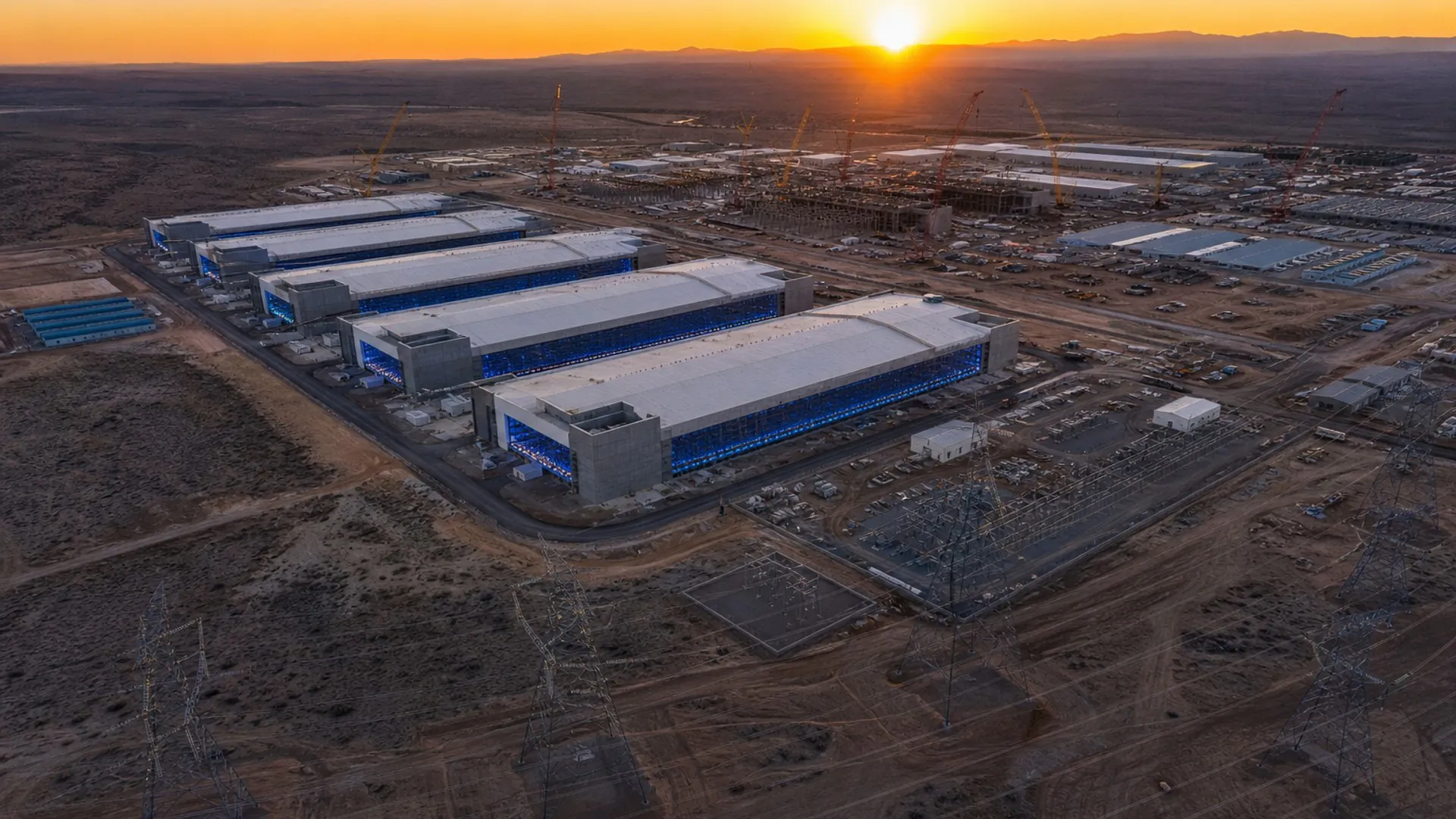
- At least 100,000 advanced AI accelerators as a national horizon, led by the private market, with an initial dedicated buildout of 5,000
- A quantum computer built on Israeli technologies under a “state as customer” model
- An advanced chip fabrication facility at 5-nanometer technology or below, with mechanisms ensuring Israel priority access to output produced on its territory
- A dedicated energy plan for AI infrastructure, including geothermal and regional partnerships under the I2U2 framework
- A feasibility study on hosting AI computing infrastructure in low Earth orbit, run with the Israeli space industry and the national space agency
The plan rests its case on an existing industrial base: Israeli cyber companies drew $3.8 billion in investment in 2024 (a sum the document puts at 40% of all private U.S. cyber investment that year), and seven of the world’s ten largest cyber companies run R&D centers in Israel. It also cites Google’s $32 billion acquisition of Israeli cyber firm Wiz as the largest deal in Israeli high-tech history, and total Israeli tech exits of $58.8 billion in 2025. The Directorate’s program site adds a nationwide upskilling target of four million people and puts Israeli representation in global top-tier AI talent at one in 115 Israelis.
From Resolution to Action Plan
Israel’s AI program has moved in dated steps. The cabinet’s June 16, 2026 approval of the national program established the Directorate’s mandate, the 100,000-processing-unit goal, and the decision to concentrate national effort on Cyber AI and Physical AI. The August 13, 2026 plan is the implementation document that resolution called for, published alongside a public consultation on execution that the Directorate’s site says closes September 6, 2026. Active tenders already posted include a call for challenges for the National Institute, a request for information on physical AI test environments, the Nexus Project tender for a sovereign quantum computer, and an RFI on sovereign model capabilities.
The international chapter anchors the strategy in the U.S. partnership (the plan references Israel’s standing in what it calls the emerging Pax Silica) while committing Israel to attract the R&D laboratories of leading AI companies through a dedicated “corporate embassy” framework for each. It also commits the government to working with international AI developers on accuracy and bias in how global models represent Israel and Jewish communities, and to pursuing an Israeli safety standard for autonomous systems, the “Israeli Safety Card,” with an eye toward mutual-recognition arrangements with European and U.S. authorities. The near-term milestones are the ones already on the calendar: the September 6, 2026 consultation close and the first reactor and laboratory selections that follow.
